When One Issue Takes Up Too Much Space
When One Issue Takes Up Too Much Space
Nov 30, -0001
A 90-minute reset when one thing won't leave you alone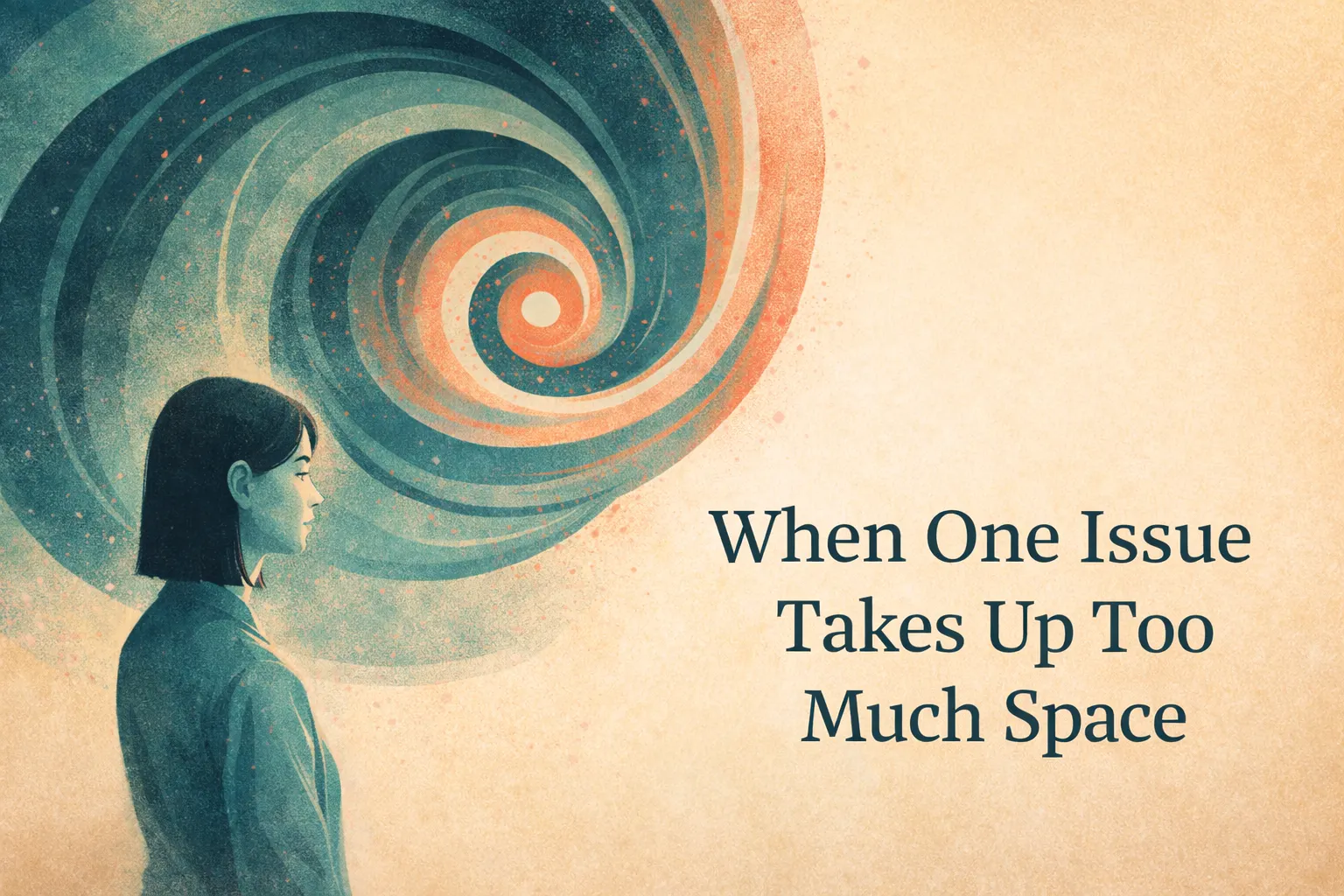
Sometimes it isn’t that everything is wrong. Life is still moving. You’re still showing up. You’re still capable. Yet one situation keeps following you around like background noise you can’t switch off. One decision. One conversation. One thing that keeps replaying.
Let’s take, for example, a decision to apply for another role. While working at my last employer, a role was advertised, and I knew I was a strong candidate, but I second-guessed myself: was I ready? Did Ihave the right experience? What if I fail? With those questions in my head, I put off applying for the role. That procrastination led to sleepless nights, lingering questions about whether to apply, and scattered attention during the day, as I kept seeing reminders in my email and the closing date was fast approaching. Eventually, the choice was taken out of their hands when the application deadline closed, and so was the opportunity. Relief? No. Regret? Yes, all because I did not make a decision.
You can function while it’s happening. You can meet expectations. You can even look calm. But you know the truth. Part of your mind is elsewhere, running the same loop, trying to land something it hasn’t landed yet.
I’ve seen this in high performers again and again. Not because they are dramatic. Because they care. And because unfinished things do not politely wait their turn.
Why One Unresolved Issue Drains Your Capacity

An unresolved issue doesn’t take up one small corner of your brain. It shows up in how long it takes you to decide, how patient you feel, and how easily you can focus. You might notice you’re reading the same paragraph twice. You open a tab, forget why you opened it, then circle back to the same thought again.
There’s a reason it feels like it’s running alongside everything. Research on unfinished tasks shows they can remain mentally active and intrusive until your mind experiences them as “complete”. (Harvard Business Review)
Even when you move on to other work, the residue can remain. Sophie Leroy’s work on attention residue found that when people switch tasks, part of their attention often stays stuck on the previous unfinished task, which reduces performance on the next one. (ScienceDirect)
So yes, one issue can genuinely reduce your capacity. Not because you’re fragile. Because your attention is being taxed.
Why It Rarely Revolves "With Time"
Many women tell themselves it will settle if they leave it alone. They assume time will bring clarity. Or they push through, hoping the issue will fade once the week calms down.
Sometimes that happens. Often it doesn’t.
The loop stays open because the conditions for resolution haven’t been created. You don’t have enough space to see clearly. You’re trying to solve the issue from inside the same pressure that keeps it alive.
That’s also why analysing harder can make it worse. It adds more thinking to a system that already feels full.
What Changes When Thinking Slows

Clarity often returns when the pace drops and your nervous system stops treating the issue like an emergency. Perspective comes back online. You start seeing what matters, what you added on top, and what the actual decision is.
This is not just a nice idea. Rumination, the repetitive replaying of work problems, has been linked with poorer executive functioning, the mental skills that support focus, planning, and flexible thinking. (Frontiers)
When you’re in a loop, you’re not accessing your best judgement. You’re managing noise.
And because working memory is limited, even a single “open loop” can crowd out the mental space you need for the rest of your life. (Wiley Online Library)
What Reset and Rise Is Designed For

Reset and Rise is a focused 90-minute session on one issue taking up too much space.
Not a life overhaul.
Not therapy.
Not a long process.
One issue. One reset. One clear next step.
You don’t need to arrive prepared. You don’t need to have the perfect words. You just need to know there’s something you keep circling, and you’re ready to stop paying that mental tax.
What You Leave With
By the end of the session, most people notice the pressure drops. The issue looks different. The next step becomes clearer.
Sometimes that step is action. Sometimes it’s a decision. Sometimes it’s realising what doesn’t need your attention anymore.
Either way, the issue stops dominating your headspace. You get your capacity back.
A Question to Pause With
If one issue has been quietly draining your attention, what might change if it no longer took up this much space?
Book A Reset and Rise Session
Reset and Rise is available on selected dates.
If you’re ready to get clarity on the one thing you keep replaying, book your session here